 Trusted Pest Experts
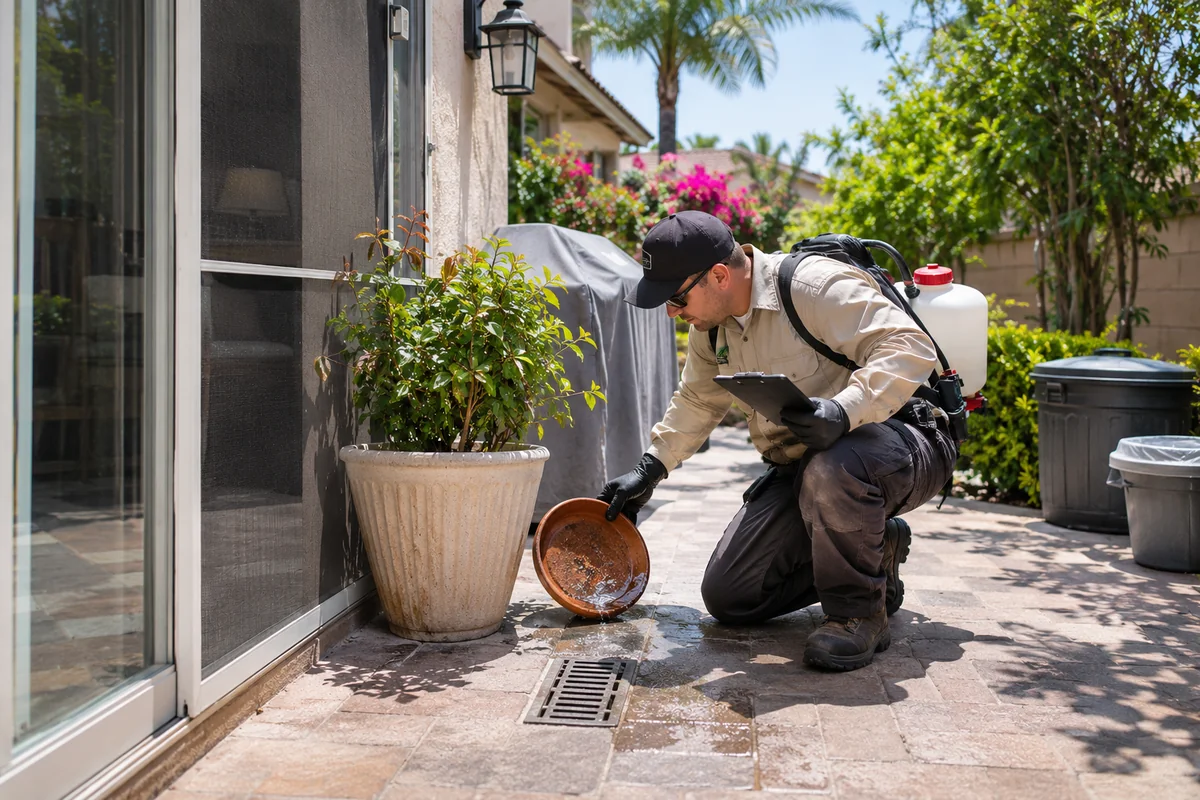
Reduce mosquito breeding opportunities around Los Angeles patios and gardens with practical water-management and bite-prevention steps. Read more practical guidance in our Los Angeles pest control blog.
Small water sources can matter
Mosquitoes can develop in water that collects in plant saucers, buckets, clogged gutters, unused toys, and other containers. Even a well-kept Los Angeles backyard may have overlooked breeding sites after irrigation or rain. Inspecting these areas regularly is often more useful than focusing only on visible adult mosquitoes.
Los Angeles yards can contain mosquito breeding opportunities even during periods when the weather feels dry. A small amount of water in a plant saucer, clogged gutter, uncovered bucket, or neglected fountain may persist long enough to support larvae. Shaded corners, dense vegetation, and sheltered patios can also create places where adult mosquitoes rest. Prevention is therefore about a consistent property routine, not only about treating the air when bites become noticeable.
Mosquitoes need water for their immature stages, and even small containers can become breeding sites when water remains long enough. In Los Angeles yards, check plant saucers, buckets, clogged gutters, toys, tarps, and decorative features. A landscaped property can look dry while hidden pockets of water persist beneath leaves or equipment. Inspection should include shaded corners and places that are rarely used. Different mosquito species have different biting patterns, so daytime activity does not rule out mosquitoes.
A small amount of standing water can be enough for mosquitoes to develop, so prevention requires more than checking obvious ponds. Inspect plant saucers, buckets, neglected toys, clogged gutters, and low areas where irrigation runoff collects. Empty, scrub, or appropriately maintain water-holding containers on a regular schedule. Pay particular attention after watering changes or rain. The U.S. Environmental Protection Agency provides broader information on reducing pest habitat and using control products responsibly.
Build a weekly water-check routine
Empty, scrub, turn over, cover, or discard containers that hold water. Refresh pet bowls and birdbaths regularly, maintain swimming pools, and check drainage around outdoor kitchens and patios. Some water features require specialized mosquito-control products; follow label directions and local vector-control guidance.
Walk the yard at least weekly and after irrigation or rain. Empty and scrub containers that collect water, including pet dishes, toys, wheelbarrows, and saucers. Maintain pools and decorative water features according to their intended operation, and address drainage problems that leave standing water. Pay attention to hard-to-see locations behind sheds and beneath decks. Some breeding sites may be on neighboring properties, so community-level prevention also matters.
Empty and scrub containers on a regular schedule because mosquito eggs may remain attached to the inside surfaces. Repair drainage issues where possible, keep rain barrels properly screened, and maintain pools or water features according to applicable guidance. Where water cannot be removed, seek advice from local vector control or follow the label of an appropriate mosquito-control product. Do not add chemicals to ponds or drains without verifying that the product is permitted for that use.
For safer pesticide use and prevention principles, consult the U.S. Environmental Protection Agency.
Backyard conditions vary across Los Angeles, from shaded courtyards to landscaped hillside properties. Dense vegetation can provide resting areas, while decorative water features and drainage problems can create breeding opportunities. Screens, suitable clothing, and labeled repellents can reduce bites, but no single measure eliminates all risk. If you are evaluating an outdoor treatment, ask which mosquito species and breeding sites it is intended to address and how the plan limits unnecessary exposure. See more seasonal guidance in our pest control blog.
Make outdoor seating more comfortable
Repair window and door screens, use fans where practical, and choose EPA-registered insect repellents according to their labels. Long sleeves can reduce exposed skin during high-activity periods. Mosquito species differ in when they bite, so daytime and evening precautions may both be useful.
Mosquitoes are not all equally active at the same times, and some species bite during daylight hours. For outdoor gatherings, consider window and door screens, well-fitted clothing, and an EPA-registered repellent used according to its label. Fans may make a seating area less attractive to some mosquitoes but do not remove breeding sources. The Centers for Disease Control and Prevention provides current general advice on avoiding bites and reducing mosquito habitat.
Physical barriers reduce exposure even when breeding sources are outside the property. Repair window screens, use door screens, and consider fans for outdoor seating areas because moving air can make landing more difficult. Wear clothing that covers exposed skin when practical and use an EPA-registered repellent according to its label. Landscaping changes may improve airflow, but trimming vegetation alone does not eliminate mosquitoes if standing water remains nearby.
Persistent mosquito activity may originate beyond a single yard, especially where neighboring properties, drainage infrastructure, or shared landscaping are involved. A useful inspection identifies manageable sources on the property and explains when public vector-control resources may be appropriate. Ask for recommendations that distinguish habitat reduction from any proposed pesticide application, including maintenance responsibilities between visits. To discuss a property-specific concern, contact info@pclosangeles.com.
Coordinate with neighbors and local agencies
Mosquitoes can move between neighboring properties, making shared source reduction valuable. Los Angeles-area vector-control agencies publish guidance on breeding sites, surveillance, and reporting. Contact the agency serving your address if you notice persistent mosquito activity or suspect a breeding problem beyond your property.
Landscape management should preserve useful shade and planting while reducing unnecessary standing water. Clear gutters safely, repair leaking hose connections, and avoid excessive irrigation that pools along hardscape edges. If a rain barrel is used, make sure it is properly screened and maintained. Do not add household chemicals to ponds, drains, or other water features as an improvised control method; treatment decisions should follow applicable labels and local guidance.
Mosquito management is a neighborhood-scale issue because adults can move between properties. A single yard may be well maintained while nearby unmanaged water sources continue to produce mosquitoes. Local vector control agencies can provide location-specific guidance on surveillance, breeding-site reporting, and public-health concerns. See the U.S. Environmental Protection Agency for repellent and pesticide information, and our pest control blog for other outdoor pest prevention topics.
Know when a professional assessment helps
If mosquitoes remain abundant after water sources are addressed, a trained professional can inspect vegetation, drainage, and hard-to-see containers. Ask what conditions are being targeted and whether treatment is appropriate. Habitat reduction remains an important part of any longer-term mosquito management plan.
When biting activity remains high despite source reduction, document where and when it occurs and ask whether a local vector-control agency should be involved. A property assessment can identify maintenance issues that are easy to miss from the patio. For questions about backyard pest prevention, reach us at (888) 605-9733 or info@pclosangeles.com. You can find other Los Angeles household pest guides on our pest control blog.
If biting remains intense despite source reduction and screening, document where and when it occurs and consider an assessment of the yard. A useful plan should prioritize breeding-site correction and explain any proposed treatment, its limits, and follow-up. For a conversation about mosquito concerns at a Los Angeles property, contact us at (888) 605-9733 or info@pclosangeles.com. Continued monitoring is important because new standing-water sources can appear after irrigation changes or rain.
Find additional seasonal pest prevention topics in our pest control blog. If you would like to discuss a possible inspection, contact PC Los Angeles at (888) 605-9733.
Discuss Your Pest Concern With PC Los Angeles
For questions about pest activity at your home or property, call (888) 605-9733 or email info@pclosangeles.com. You can also explore our Los Angeles pest control articles for additional prevention guidance.
If pest activity continues or you are uncertain what you have found, seek an inspection and a pest-specific management plan. Prevention and appropriate follow-up are often as important as the initial response.