 Trusted Pest Experts
Learn how to recognize possible bed bug activity in Los Angeles bedrooms, inspect safely, and avoid common mistakes that spread an infestation. Read more practical guidance in our Los Angeles pest control blog.
Bed bugs are not a cleanliness issue
Bed bugs can be transported in luggage, secondhand furniture, and personal belongings. They can occur in houses, apartments, hotels, and other places where people rest. Their presence does not prove a home is dirty, and bites alone cannot reliably confirm an infestation.
Bed bugs can be introduced through luggage, secondhand furniture, or movement between rooms and units; their presence is not a reliable indicator of cleanliness. Because they are small and hide in narrow seams, an infestation may be present before a live insect is noticed. Residents of apartments, houses, and short-term rentals should focus on verifiable physical evidence rather than assuming that any unexplained skin irritation confirms bed bugs.
Bed bugs generally remain close to places where people sleep or rest, but they may hide in narrow seams, screw holes, furniture joints, and nearby belongings. They do not fly or jump, and an infestation can be present without every resident experiencing visible skin reactions. Because skin marks can have many causes, inspection should focus on physical evidence. Early detection helps limit the number of items that need to be examined and reduces the chance of accidentally moving insects elsewhere.
Bed bugs can be introduced through luggage, secondhand furniture, or other belongings, and their presence does not establish that a home is unclean. Because bites alone are not reliable for diagnosis, inspect seams, joints, and nearby hiding places for physical evidence before concluding that bed bugs are responsible. Keep any suspected specimen or a clear photograph for identification without spreading items to other rooms. For general pest-management principles, see the U.S. Environmental Protection Agency.
Where to look for physical evidence
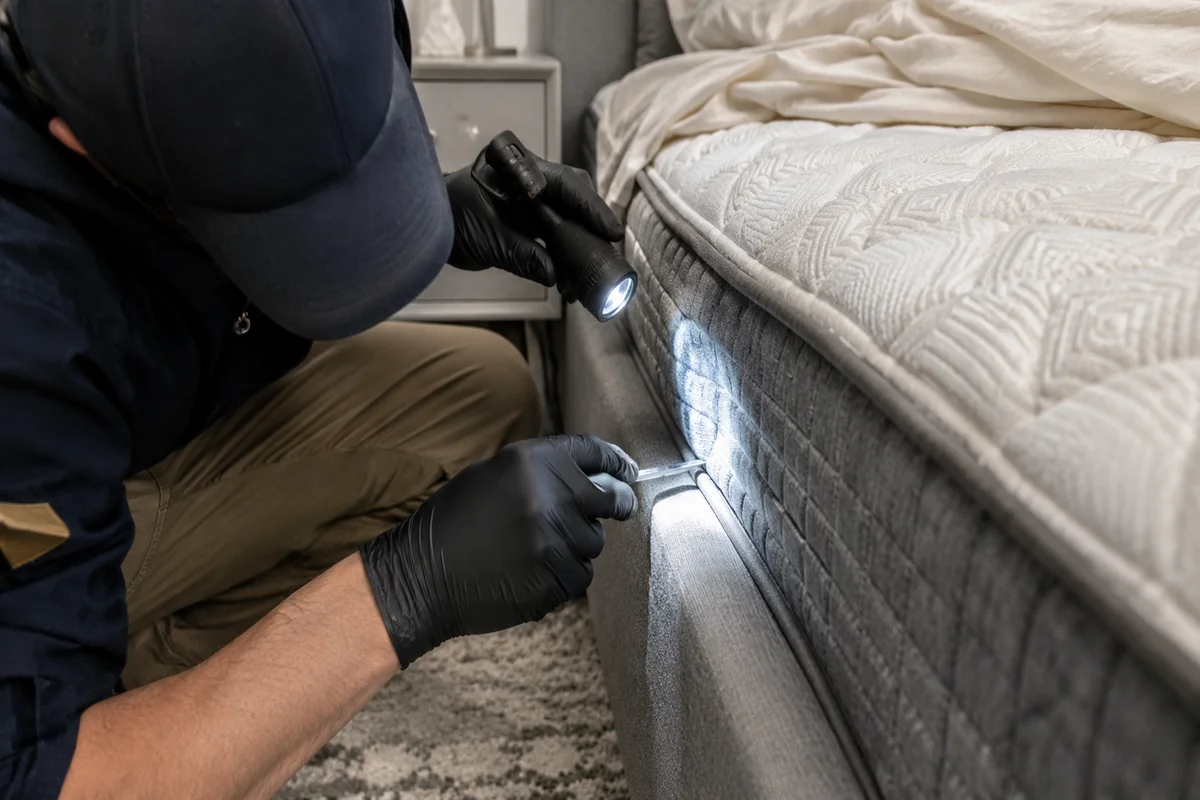
Examine mattress seams, box spring edges, bed frames, headboards, and nearby furniture for live insects, shed skins, dark spotting, or pale eggs. Use a flashlight and inspect slowly rather than dismantling everything at once. If you find a specimen, preserve it in a sealed container for identification.
Inspect mattress piping, box-spring edges, headboard joints, bed-frame connections, and nearby furniture with a flashlight. Look for live insects, shed skins, eggs, and dark spotting, but remember that stains can have other causes. Photograph suspected specimens without crushing them when possible. Skin reactions vary from person to person, and bites alone cannot identify the pest. The Centers for Disease Control and Prevention explains common bed bug signs and why identification matters.
Use a flashlight to inspect seams and crevices slowly. Look for live insects, cast skins, eggs, and dark spotting, but do not assume that every dark mark is bed bug evidence. If possible, capture a suspected insect in a secure container or take a clear close-up photograph for identification. Avoid discarding an entire mattress solely because of an unconfirmed bite. A trained inspection can distinguish bed bugs from carpet beetles, fleas, and other lookalikes before treatment decisions are made.
For identification and treatment considerations, consult the U.S. Environmental Protection Agency.
Avoid discarding furniture or moving bedding throughout the property before obtaining a plan, as this can increase the risk of spreading insects and create unnecessary expense. Laundry and heat-based measures must be carried out correctly, and household products should never be applied to skin or sleeping surfaces unless their labels specifically permit that use. Residents of apartments should notify the appropriate property contact promptly so adjacent units can be considered when needed. Our pest control blog includes other practical guidance for managing household pest concerns.
Avoid spreading items between rooms
Moving bedding, furniture, or clothing without containment can carry insects to new areas. Bag washable textiles before transporting them and follow appropriate laundering and high-heat drying instructions for the fabric. Do not assume that placing belongings in sunlight will reliably eliminate all life stages.
Avoid carrying unsealed bedding, loose clothing, or furniture through shared hallways when an infestation is suspected. Place washable items in securely closed bags before transport to laundry, and follow appropriate laundering and dryer guidance for the fabric. Reduce clutter around the sleeping area so seams and crevices can be inspected. Do not discard a mattress impulsively; moving infested belongings without a plan can spread insects and create unnecessary costs.
Containment matters when preparing laundry and belongings. Bag affected washable fabrics before carrying them through shared spaces, and use a dryer cycle appropriate for the material and recommended for bed bug management. Keep cleaned items in fresh sealed bags until the room has been addressed. Avoid moving furniture into hallways or common areas where it could expose other residents. In multi-unit housing, coordinate with building management and follow applicable notification procedures.
An effective professional plan should explain how the infestation was confirmed, which rooms require inspection, how belongings should be prepared, and when follow-up checks will occur. Some approaches require multiple visits because hidden insects and eggs may remain after an initial treatment. Ask how monitoring will verify progress and what precautions apply to occupants and pets. To discuss suspected activity in a Los Angeles home, contact info@pclosangeles.com or call (888) 605-9733.
Why foggers and improvised treatments are risky
Total-release foggers may not reach insects hidden in cracks and can introduce unnecessary exposure or fire hazards when misused. Never apply pesticides to bedding, skin, or mattresses unless the product label specifically permits that use. A treatment plan should account for hiding places, follow-up inspection, and neighboring units where relevant.
Bed bug treatment often requires a coordinated program and follow-up, especially in multi-unit buildings. Over-the-counter foggers and improvised chemical mixtures can be ineffective or hazardous. A qualified professional can assess the extent of activity, explain preparation requirements, and determine whether neighboring rooms should be inspected. Keep records of sightings and any treatments, and notify the property manager when required by the housing arrangement.
Do not use outdoor pesticides indoors, apply products to skin, or rely on foggers as a stand-alone solution. Heat treatments, targeted applications, encasements, and monitoring may be considered depending on the situation, but each has practical limits. Follow the U.S. Environmental Protection Agency for bed bug management and pesticide precautions, and review our pest control blog for related household prevention advice. A clear preparation checklist from a qualified provider can prevent unnecessary disposal and reduce disruption.
How to respond to a suspected infestation
Record where evidence was found, limit unnecessary movement of belongings, and arrange reliable identification. For rental housing, notify the appropriate property contact and follow applicable local requirements. Early, coordinated action can reduce disruption and prevent the problem from becoming more widespread.
Prompt identification makes decisions easier. If you find a suspected bed bug, save a clear photograph or specimen in a secure container for identification and avoid spraying the sleeping area indiscriminately. Contact (888) 605-9733 or info@pclosangeles.com to discuss an inspection and next steps. For additional information on preventing pest introductions and responding to household activity, visit our pest control blog.
After treatment, follow-up inspections and monitoring help determine whether activity has stopped. Ask what evidence was found, which rooms or units require attention, and what occupants should do before and after service. If you suspect bed bugs in a Los Angeles residence, call (888) 605-9733 or email info@pclosangeles.com for information about an inspection. Acting on confirmed evidence is more reliable than treating based only on bites or online photographs.
Our pest control blog also covers other common household pest concerns. If you would like to discuss a possible inspection, contact PC Los Angeles at (888) 605-9733.
Discuss Your Pest Concern With PC Los Angeles
For questions about pest activity at your home or property, call (888) 605-9733 or email info@pclosangeles.com. You can also explore our Los Angeles pest control articles for additional prevention guidance.
If pest activity continues or you are uncertain what you have found, seek an inspection and a pest-specific management plan. Prevention and appropriate follow-up are often as important as the initial response.