 Trusted Pest Experts
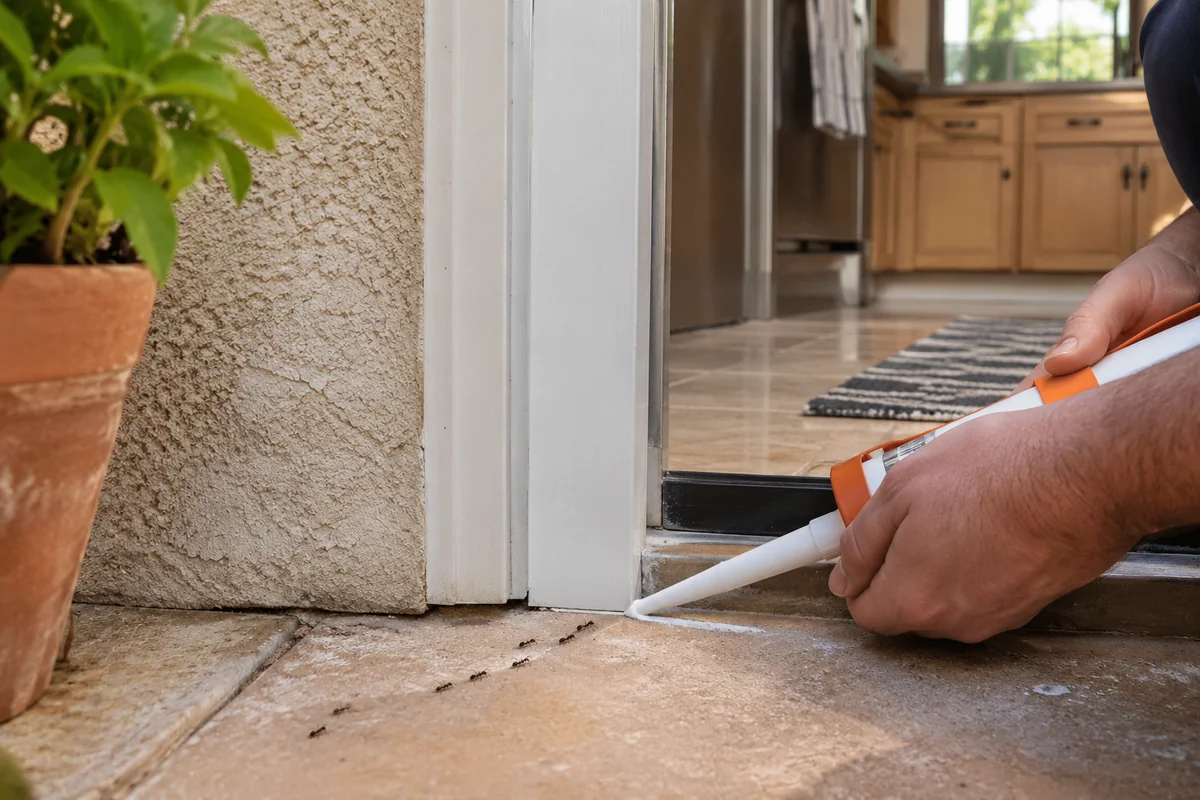
Discover why ants enter Los Angeles homes, what attracts them, and how to reduce recurring trails without making the problem worse. Read more practical guidance in our Los Angeles pest control blog.
Why ants suddenly appear indoors
Ant trails often become noticeable when colonies find accessible food or water. Warm conditions, irrigation, landscaping, and seasonal weather changes can shift foraging routes around Los Angeles homes. A trail across a countertop may lead back to an exterior crack or a tiny gap around a window.
Ant activity may increase after changes in temperature, rainfall, or landscape irrigation, but the exact pattern depends on the species and local conditions. Colonies can establish nests in soil, mulch, wall voids, or other protected areas. Foraging workers may travel considerable distances to reach a dependable source of sugar, protein, or moisture. That is why a trail across the kitchen counter does not necessarily mean the nest is inside the kitchen.
Ants may enter a home when irrigation changes, outdoor soil dries, rain disturbs nesting areas, or an accessible food source becomes available. Their trails can be highly organized, with workers repeatedly following scent cues to a resource. A sudden line of ants does not necessarily mean the colony is inside the wall; it may be outdoors and using a small entry point. Look at where the trail begins and ends before choosing a response. Species identification is especially important where colonies have multiple nesting locations.
Ant activity often changes with temperature, rainfall, irrigation, and access to food, which means a trail may appear suddenly even in a well-maintained home. Observe whether ants are entering from the exterior, traveling along plumbing penetrations, or emerging from cracks near a window. Their route and food preference can provide clues, but species identification is important before selecting a control strategy. The U.S. Environmental Protection Agency recommends prevention measures that address access and attractants rather than relying solely on pesticide applications.
Find the route before wiping it away
Observe where ants are entering and what they are collecting. Note whether they follow plumbing, window trim, door thresholds, or vegetation touching the house. Identification is important because different ant species respond differently to bait and exclusion measures.
Before cleaning a visible trail, take a photograph and follow it toward its entry point if practical. Check around window frames, sliding doors, plumbing penetrations, and exterior planters. Look for food sources at the destination, including sugary residue, pet bowls, and damp sponges. Record whether the trail returns after cleaning; this information can be useful when determining whether a treatment is working or a different source is involved.
Photographing a trail before cleaning can preserve useful information for an inspection. Check whether the insects are attracted to sweet residues, proteins, moisture, or pet food, and note any changes after cleaning. Avoid relying on color alone to identify ants, because several species look similar to non-specialists. If insects are emerging from damaged wood, the issue may require a closer inspection to distinguish ants from termites or other wood-associated pests.
For general guidance on integrated pest management and pesticide safety, consult the U.S. Environmental Protection Agency.
Wiping a visible trail may provide temporary relief without affecting the colony responsible for it. In some species, disturbing nests or using inappropriate sprays can scatter activity into new locations. Keep food sealed, address moisture sources, and avoid placing products where children or pets can contact them. A professional can determine whether monitoring, exclusion, baiting, or another approach is appropriate for the identified ant species. Explore our pest control blog for more information about household pest prevention.
Make kitchens and patios less attractive
Clean sticky spills, rinse recyclable containers, store sweets and pet food securely, and keep garbage bins closed. Outdoors, move fallen fruit, control excessive irrigation, and trim branches that touch the building. These steps reduce food and moisture but may not remove an established colony.
Outdoor maintenance often makes a measurable difference to conditions that attract foragers. Trim plant growth away from siding, avoid allowing irrigation to wet the foundation continuously, and remove ripe fallen fruit. Indoors, clean under toaster ovens and along cabinet edges, where small crumbs accumulate. These steps are not a guarantee against ants, but they reduce opportunities for colonies to repeatedly exploit the same resources.
Outdoor maintenance can make a substantial difference. Keep branches and shrubs from resting against siding, address leaking hose bibs, and avoid continuously wet soil against foundations. Indoors, clean the edges of counters and under small appliances, not only the visible preparation surfaces. Store open pantry goods securely and wash recycling containers. These measures reduce attractants, but they may need to be combined with colony-focused management when a persistent trail is established.
When ants repeatedly return, record the rooms involved, the approximate time of day, and any association with irrigation or recent weather changes. This information can help distinguish a short-lived foraging event from an established indoor problem. In attached housing, shared walls and landscaping may require coordinated action. Ask for a written explanation of the suspected species, proposed treatment locations, and how success will be measured. Questions about an inspection can be directed to info@pclosangeles.com.
Understand why random sprays can fail
Spraying visible workers may briefly interrupt a trail without reaching the nest. Some ant species can spread into additional nesting sites when disturbed by certain treatments. Use products only as labeled, and avoid placing repellent sprays where they could interfere with a baiting approach.
Not all ant-control products work the same way, and a poorly placed spray may interfere with a baiting strategy. Some species respond to disturbance by relocating or creating additional nesting sites. Rather than combining multiple products, use a pest-specific plan based on identification and follow the label instructions. If children or pets use the area, placement and access restrictions deserve particular attention. The U.S. Environmental Protection Agency offers general guidance on prevention and safer product use.
The choice of control method should depend on the species and where the colony is located. Some bait programs require time for workers to carry material back to the nest; disrupting trails with unrelated sprays can undermine that process. Follow product labels and keep all pesticides away from children, pets, and food-contact areas as directed. The U.S. Environmental Protection Agency offers useful guidance on safer pest management decisions. You can also explore our pest control blog for broader home prevention measures.
What to do when ants keep returning
Document the trail locations and times of day, then inspect likely exterior entry points. If ants return despite sanitation and sealing, ask a pest professional to identify the species and recommend a targeted plan. Long-term results often require attention to both the colony and the conditions that attract it.
Recurring trails in several rooms, activity near electrical fixtures, or an infestation that returns after cleaning deserves closer investigation. A professional can distinguish a temporary foraging event from a larger colony issue and recommend steps suited to the building. Call (888) 605-9733 or email info@pclosangeles.com to discuss what you are seeing. Our pest control blog also covers cockroaches, rodents, and other common Los Angeles pest concerns.
If trails return to the same window, sink, or patio door after cleaning, ask for an assessment that includes exterior conditions and likely nesting areas. Documenting recurrence helps determine whether entry-point work, moisture correction, or targeted treatment is needed. A professional should explain the identification and follow-up plan rather than promise that all ants will disappear immediately. For Los Angeles ant concerns, reach out by (888) 605-9733 or info@pclosangeles.com.
You can read additional home prevention advice on our pest control blog. If you would like to discuss a possible inspection, contact PC Los Angeles at (888) 605-9733.
Discuss Your Pest Concern With PC Los Angeles
For questions about pest activity at your home or property, call (888) 605-9733 or email info@pclosangeles.com. You can also explore our Los Angeles pest control articles for additional prevention guidance.
If pest activity continues or you are uncertain what you have found, seek an inspection and a pest-specific management plan. Prevention and appropriate follow-up are often as important as the initial response.